By Dawn Bowman
Ever launched a Facebook ad thinking, “This one’s going to work,” only to check back and see barely any clicks, no real engagement, and money slipping away? It’s frustrating. You’re not trying to waste money.
You just want the ads to do what they’re supposed to do. The truth is, getting good ROI from Facebook Ads isn’t about spending more. It’s about knowing what works and what doesn’t. In this guide, we’ll walk you through some clear and honest tips that can help you finally achieve the returns you’ve been hoping for.
Let’s get started.
12 Tips to Optimize Facebook Ads ROI
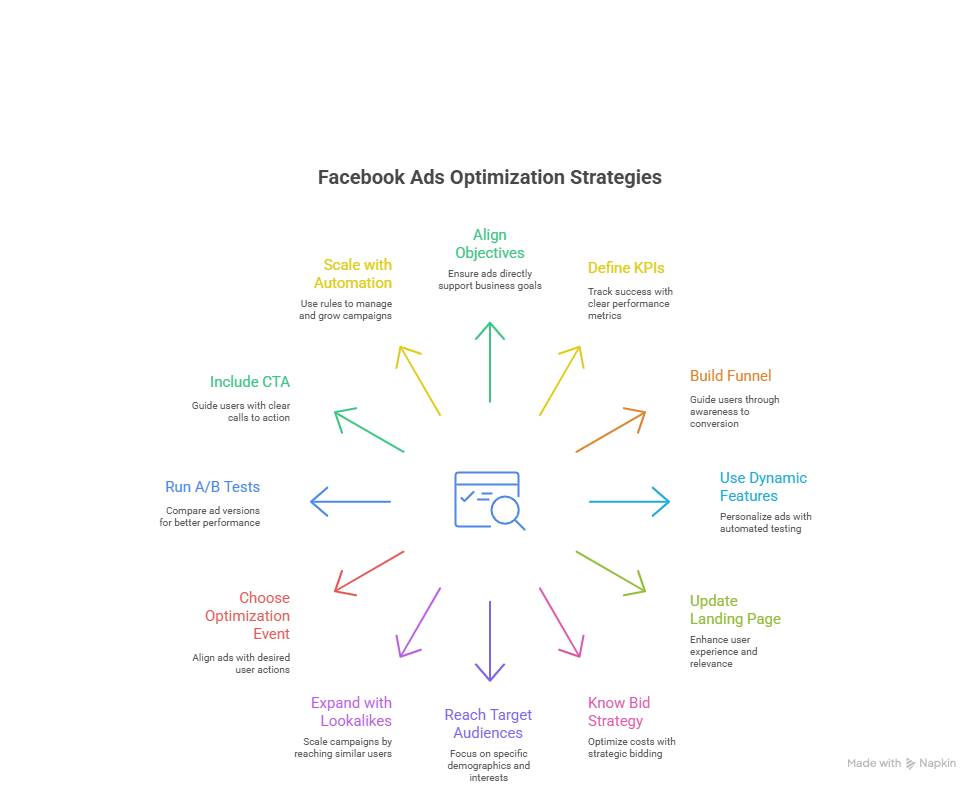
Here are 12 practical tips that can help you to optimize your Facebook Ads ROI:
Align Campaign Objectives with Business Goals
Start by making sure your Facebook ad campaign has a clear purpose that connects directly to your business goals. If your goal is to drive sales, don’t settle for vanity metrics like likes or comments. Choose the right campaign objective in Ads Manager that reflects what you actually want to achieve, whether that’s purchases, sign-ups, or website visits.
Define Your Key Performance Indicators
Knowing what to measure is just as important as running the ad. Set clear Facebook KPIs to track the success of your campaign. These could include cost per lead, return on ad spend (ROAS), click-through rate (CTR), or engagement rate. When you define your KPIs early, it helps you stay focused and make better decisions throughout the campaign.
Build a Facebook Ads Funnel
Not everyone who sees your ad will be ready to buy right away. That’s why it’s important to build a funnel with different stages. Start with awareness ads for cold audiences, then move to consideration ads, and finally retarget with conversion ads. This step-by-step approach warms up your audience and leads to better ROI in the long run.
Use Facebook’s Dynamic Features
Take full advantage of Facebook’s dynamic creative tools. These allow you to automatically test different combinations of images, headlines, and descriptions to see what works best. Dynamic ads can also show the right products to the right users based on their browsing behavior. It’s a smart way to personalize your message and improve results without doing everything manually.
Update Your Landing Page
A strong ad needs a strong landing page. If your landing page is outdated, slow, or doesn’t match the message in your ad, you’ll lose potential customers fast. Make sure your landing page is mobile-friendly, loads quickly, and clearly tells visitors what to do next. Keep the design clean and make the content relevant to the ad they clicked on.
Know the Best Bid Strategy
Facebook offers several bidding options like lowest cost, cost cap, or bid cap. Choosing the right one depends on your campaign goal and budget. If you’re new, start with automatic bidding. But if you’ve run campaigns before and know your numbers, consider testing manual bidding to control your costs better. Don’t just pick one and forget it. Monitor how it performs.
Reach the Right Target Audiences
Facebook gives you powerful targeting options, so use them wisely. Narrow down your audience based on interests, location, behaviors, or even custom audiences from your website or email list. The more specific you are, the more likely you are to reach people who will actually engage with your ad. This is key when learning how to engage your customers on Facebook, as targeting the right audience ensures better results. Avoid casting a net that’s too wide.
Expand Your Reach with Lookalikes
Once you know what type of people are already engaging with your brand, create lookalike audiences to reach new users who are similar to them. This helps you scale your campaign without guessing who might be interested. Start with your highest-value customers or email subscribers as the base for your lookalike.
Choose the Right Optimization Event
When setting up your ad, Facebook asks what event you want to optimize for. This could be something like landing page views, add to cart, or purchase. Pick the event that lines up with your goal. If you want sales, don’t just optimize for clicks. Train the algorithm to show your ad to people most likely to complete that specific action.
Run A/B Tests with Ads Manager
Don’t assume your first version of the ad will be the best. Use Facebook Ads Manager to set up A/B tests and compare different versions of your creatives, headlines, audiences, or placements. This data helps you make smart decisions backed by real performance, not just gut feeling.
Include a CTA
A good ad tells the viewer what to do next. Whether it’s “Shop Now,” “Sign Up,” or “Learn More,” your call-to-action should be clear and direct. Without a CTA, people might just scroll past your ad. Place your CTA in the ad copy, image, and button if possible to make it more obvious.
Leverage AI to Boost Creative Efficiency
As Facebook’s algorithm becomes more dependent on high-quality creatives, marketers need to produce content faster without sacrificing quality. AI-powered design assistants can help take that load off by generating new concepts, layouts, and messaging ideas you can plug directly into your campaigns. Tools such as Plus AI allow you to quickly transform ideas into polished creative drafts and presentations, helping you test more variations and uncover what drives the highest ROI.
Scale Optimization with Automated Rules
Once your ad is running well, use Facebook’s automated rules to scale it smartly. You can set conditions like “increase budget by 10% if cost per result is below X” or “pause ad if CTR drops below Y.” This lets your campaigns adjust automatically based on performance, helping you stay profitable without constant manual checks.
Closing Thoughts
Most Facebook ads fail not because they’re bad, but because they’re rushed, misaligned, or left on autopilot. The truth is, good ROI comes from small tweaks, clear goals, and paying attention to what the data is telling you. Treat each campaign like a live experiment. Learn from it, adjust it, and let the results guide your next move. Every campaign teaches you something. The more you learn, the better your next ad gets.
Back to Small Business blogs